 ultimate-guide
How to Choose a Wedding Stylist: 2026 Guide
Table of Contents
- Start With Your Wedding Vision and Style
- Wedding Stylist vs Hair and Makeup Artist vs Planner
- How to Research and Shortlist Wedding Stylists
- Reading a Wedding Hair Stylist Portfolio
- When to Book a Wedding Hairstylist
- Questions to Ask a Wedding Hairstylist Before You Book
- The Wedding Hair and Makeup Trial: What to Expect
- Conclusion
- Frequently Asked Questions
Last Updated: October 12, 2026
Start With Your Wedding Vision and Style
Learning how to choose a wedding stylist starts with one unglamorous step: defining what you actually want before you look at a single portfolio. A wedding stylist is a professional who plans and executes the visual elements of your wedding day look, from hair and makeup through accessories and styling details that align with your overall theme. According to The Knot's wedding planning research, couples who finalize their visual concept early report far less decision fatigue during vendor selection.
Start by pinning down three things:
- Your overall theme and color palette
- The season and venue, since both dictate practical styling choices
- Your personal style and how far you want to push it
Your wedding look should feel like an elevated version of you, not a costume. Pull inspiration photos that show hair texture, makeup finish, and dress details you love. The clearer your references, the easier it becomes to assess whether a stylist's aesthetic genuinely aligns with your wedding vision.
Wedding Stylist vs Hair and Makeup Artist vs Planner
A wedding stylist shapes your overall look and aesthetic, a hair and makeup artist executes the physical styling on the day, and a wedding planner manages logistics, vendors, and timeline. These roles overlap, and many professionals cover more than one. But the real question isn't just what each title means, it's which one you actually need to hire for your wedding.
Here's a practical way to tell them apart and decide what to book:
| Role | Core Focus | Typical Deliverables | When You Need One |
|---|---|---|---|
| Wedding stylist | Visual cohesion and aesthetic direction | Look book, styling plan, accessory curation, vendor referrals | You have a vision but need help executing it consistently across attire, decor, and photos |
| Hair and makeup artist | Physical styling on the day | Hair styling, makeup application, touch-ups | You know your look and need skilled execution |
| Wedding planner | Logistics and vendor management | Timeline, vendor contracts, budget tracking, day-of coordination | You want someone else handling the moving parts so you can be present |
| Wedding designer | Overall event design and decor | Floor plans, floral design, lighting, rental selections | You want a cohesive environment, not just personal styling |
A stylist sits between the planner and the artist: they curate the visual story, your dress, accessories, the wedding party's look, and how it all photographs, but they usually don't manage your vendor contracts or apply your makeup. Some stylists bundle hair and makeup into their service. Others work alongside a separate artist. Ask directly which services fall inside their scope of work, because assuming coverage that isn't there is one of the most common booking mistakes we see.
If you're hiring a planner separately, clarify early who owns styling decisions. Blurred lines here cause real friction later.
How to Research and Shortlist Wedding Stylists
Research and shortlist by gathering recommendations, reading reviews, and verifying credentials before you ever reach out. A practical approach is to build a shortlist of three to five professionals, then compare them against the same criteria so the decision stays objective.
Here's how we'd structure it:
- Collect names from trusted friends, recent brides, and your venue's preferred vendor list.
- Read reviews specifically for communication, punctuality, and how they handled problems.
- Verify credentials and check that their portfolio matches your wedding vision.
- Narrow to three to five stylists whose aesthetic and availability fit.
Build a Weighted Comparison Scorecard
A weighted scorecard turns a subjective decision into a clear comparison. Assign each criterion a weight based on your priorities, then score each stylist from 1 to 5. Multiply the score by the weight to get a total.
| Evaluation Criteria | What to Check | Why It Matters | Example Weight |
|---|---|---|---|
| Portfolio consistency | Style across multiple weddings | Shows reliable range, not one lucky shoot | 20% |
| Reviews | Communication and punctuality mentions | Predicts how the day will actually run | 15% |
| Availability | Confirmed open on your wedding date | Prevents wasted consultations | 10% |
| Scope of work | Hair, makeup, or full styling | Avoids coverage gaps | 15% |
| Price list clarity | Written package details | Prevents surprise add-ons | 15% |
| Communication style | Response time and tone | Affects planning and day-of calm | 15% |
| Inclusive experience | Experience with your hair/skin/cultural needs | Ensures you feel seen and understood | 10% |
Adjust the weights to match your priorities. If you have textured hair, raise the inclusive experience weight. If you're on a tight budget, raise price clarity. The point is to make your priorities explicit before emotions take over.
Where to Find Verified Professionals
Verified marketplaces give you a vetted starting point instead of a list of anyone who signed up. Alyry connects clients with vetted stylists, makeup artists, and hair professionals, so you can compare specialists and book with more confidence. Filter by specialty, whether that's a braider who works with locs or a colorist experienced with natural hair, and check availability without chasing ten separate DMs.
Reading a Wedding Hair Stylist Portfolio
A wedding hair stylist portfolio tells you more than whether the photos look good. Look for consistency: does the styling hold up across different hair types, venues, and lighting conditions? A portfolio of ten near-identical brides with the same hair texture tells you less than one showing genuine style versatility.
Check whether updos stay intact in outdoor shots, whether curls hold through what looks like a long day, and whether the finish suits the season. Ask for full wedding galleries, not just the highlights, and pay attention to the wedding party's hair too. If you see the same three poses and the same sleek blowout in every photo, that's a range problem.
When to Book a Wedding Hairstylist
Book your wedding hairstylist six to twelve months before the wedding date for peak-season weddings, and at least three to four months ahead for off-season dates. Popular stylists fill their calendars early, especially for Saturday weddings between May and October.
Availability is the constraint couples underestimate most. By the time you've shortlisted, your top choice may already be booked for your date. Reach out to your shortlist in parallel rather than one at a time, and confirm the wedding date in writing before paying any deposit.
If your wedding falls on a holiday weekend or a peak Saturday, treat six months as your floor, not your target. For a smaller wedding party or a weekday date, three months usually leaves room. The earlier you start, the more choice you keep.
Questions to Ask a Wedding Hairstylist Before You Book
Ask questions that reveal how a stylist works under pressure, not just what they charge. The right questions to ask a wedding hairstylist cover experience, scope, pricing, logistics, and how they handle the unexpected.
Bring this list to every consultation:
- How many weddings have you styled, and have you worked at my venue?
- What's included in your package, and what costs extra?
- How many people can you style on the day, and how long does each take?
- Do you travel to the venue, and is there a travel fee?
- What happens if I need to change my look after the trial?
- What are your deposit, cancellation, and change policies?
- Can you accommodate different hair textures, skin tones, and cultural styling needs?
- What's your backup plan if you're sick or delayed on the day?
The Wedding Hair and Makeup Trial: What to Expect
A wedding hair and makeup trial is a paid preview session where you test your chosen look before the wedding day. Expect it to run one to two hours, and expect to leave with photos, notes, and a confirmed plan for the morning of the wedding.
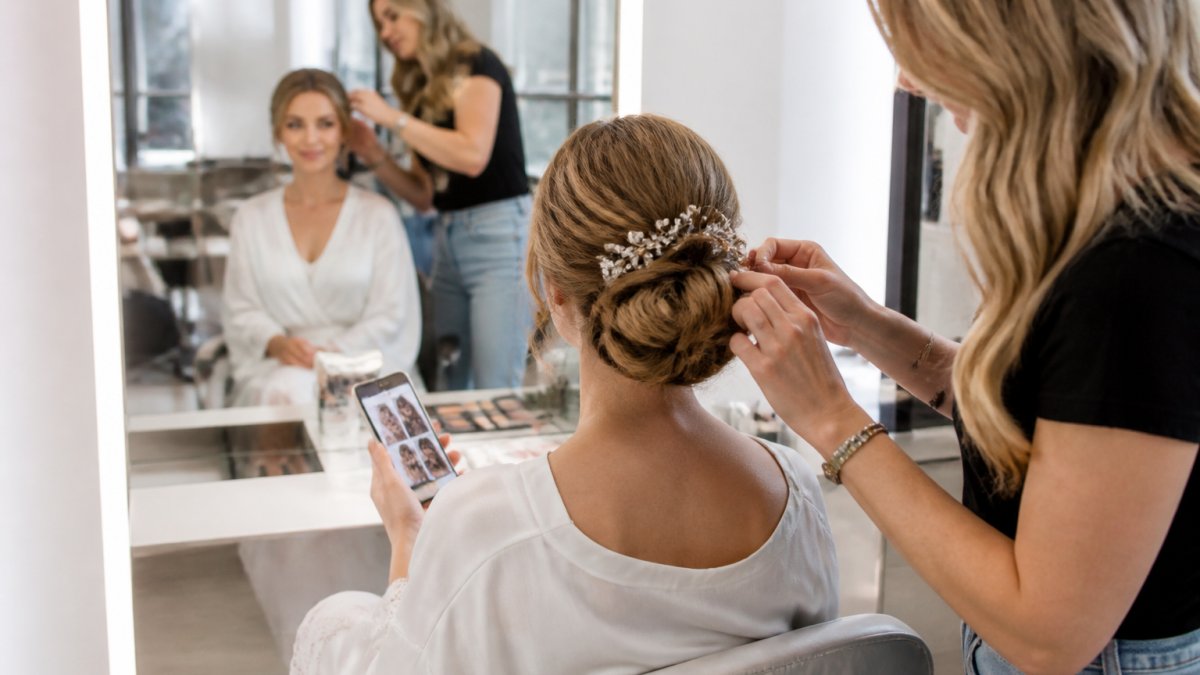
Schedule the trial three to eight weeks before the wedding, once your dress and accessories are settled. Wear a light-colored top similar to your dress, and keep your hair at its normal wash cycle so the stylist sees your real texture. Speak up during the trial. If something feels off, say so now, not on the morning of the wedding when there's no time to fix it.
What to Bring to Your Trial
- Your inspiration photos, sorted into must-have and nice-to-have
- Your veil, hair accessories, and any jewelry you'll wear
- Photos of your dress and the venue
- A phone to photograph every angle in natural light
- Notes on your wedding-day timeline and how long you'll need to stay styled
Conclusion
Choosing a wedding stylist comes down to fit: aesthetic alignment, clear scope, honest pricing, and a professional who plans for the unexpected.
Alyry makes that comparison straightforward. As a verified marketplace, we connect you with vetted stylists, makeup artists, and hair professionals across specialties, from braiders to colorists, so you can filter by service, check availability, and book with confidence. Every professional on the platform is verified before they appear.
Get started with Alyry and book a stylist who matches your vision, your date, and your budget.
Frequently Asked Questions
How do I choose a wedding hairstylist who fits my style?
Start by defining your wedding vision: the overall theme, color palette, dress neckline, and season all shape the right wedding look. Then review each stylist's portfolio for work that matches that direction, not just pretty images. Look for consistent quality across different hair types and styles. A short consultation or trial confirms whether their aesthetic and communication style align with yours before you commit.
What questions should I ask a wedding stylist before booking?
Ask about their services and scope of work, price list, deposit and cancellation terms, and availability for your wedding date. Confirm how many people they can style, whether they travel to your venue, and what the wedding-day timeline looks like. Also ask how they handle touch-ups, weather changes, and unexpected delays. Clear answers to these questions to ask a wedding hairstylist show they have done this many times before.
When should I book my wedding hair and makeup artist?
Most couples book their wedding hairstylist six to twelve months before the wedding date, and popular professionals fill their calendars earlier during peak season. If your date falls on a holiday weekend or you need a large wedding party styled, start researching even sooner. Booking early also gives you time to schedule a wedding hair and makeup trial well before the final countdown.
Should I have a wedding hair and makeup trial?
Yes. A trial lets you test the full look, check how it holds up over several hours, and confirm the stylist understands your preferences. Bring inspiration photos, your veil or hair accessories, and a top with a similar neckline to your dress. Take photos in natural light. If anything feels off, speak up during the trial rather than on the wedding day, when there is no time to redo it.
What should I bring to a bridal hair trial?
Bring inspiration photos, your veil, hair accessories, and any extensions you plan to wear. Wear a top with a neckline similar to your dress so you can see the full effect. Come with hair washed the way you normally wear it, and arrive with a clean face if makeup is included. Photos from the trial help you compare options and give the stylist clear direction.
How much does a wedding hairstylist cost?
Pricing depends on your location, the stylist's experience, the number of people in your wedding party, travel distance, and whether you book hair and makeup together. Some charge a flat package rate, others price per service. Always request a written price list and confirm what deposits, trials, and travel fees include. Compare value, not just the total, when weighing shortlisted stylists.