 How-to
How to Verify Beauty Professional Credentials (2026 Guide)
Table of Contents
- Why Verify Beauty Credentials Before You Book
- Certificate vs. License: What Actually Protects You
- How to Check Cosmetology License Status with a Licensing Board
- How to Confirm a Certificate Is Authentic
- Signs of an Unlicensed Beauty Service Provider
- Questions to Ask a Beauty Professional Before Booking
- When a Credential Cannot Be Verified: What to Do Next
- Conclusion
- Frequently Asked Questions
Last Updated: October 19, 2026
Why Verify Beauty Credentials Before You Book
Learning how to verify beauty professional credentials takes about ten minutes. It is the single best way to protect your hair, skin, and money before an appointment.
Beauty services involve chemicals, sharp tools, and close contact with your skin.
Alyry is a verified marketplace, so we think about vetting every day. Below, we break down the process so you can book with confidence.
Certificate vs. License: What Actually Protects You
A license is a legal permit to practice. A certificate is proof of training.
This distinction matters more than most clients realize. A beautiful framed certificate on a salon wall proves someone finished a course. It does not prove the state or regulator allows them to perform services.
- License: Issued by a government licensing board. Required by law to practice.
- Certificate: Issued by a school or training provider. Shows course completion only.
- Certification: Often a private trade credential. Not a legal permit on its own.
A common mistake is assuming a certificate equals a license. It does not. Always confirm the license separately with the regulatory authority.
How to Check Cosmetology License Status with a Licensing Board
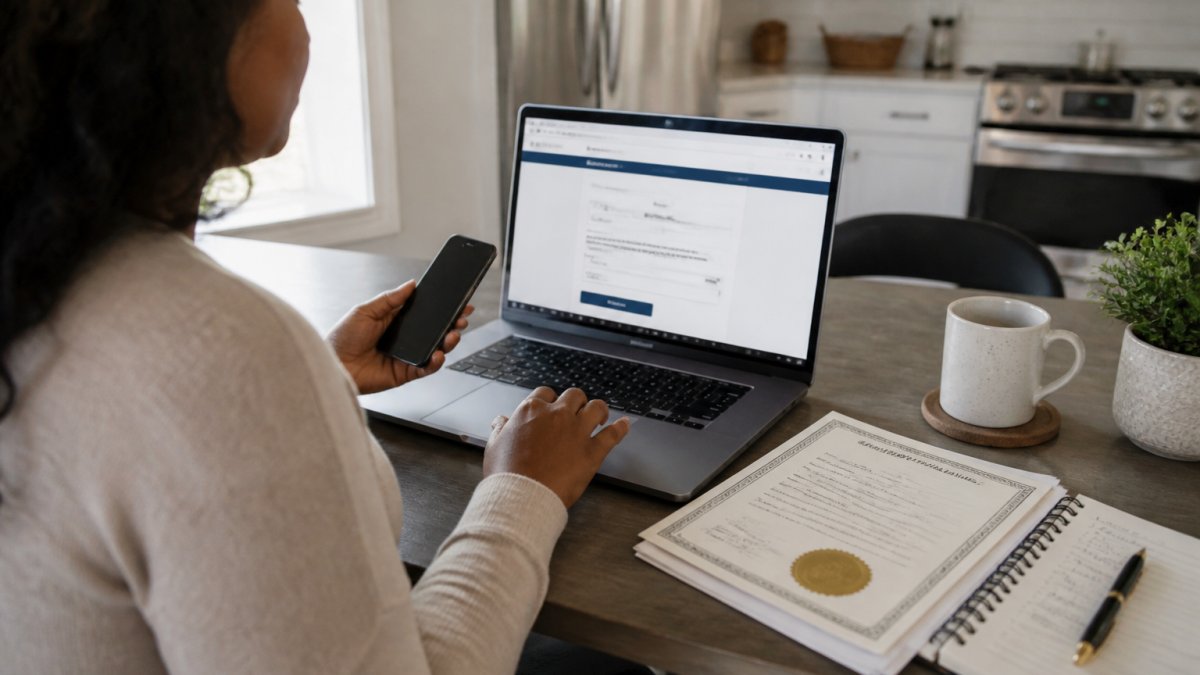
You can check cosmetology license status in minutes using your state or regional licensing board's online lookup tool. Most boards offer a free public search. The hard part is not the search itself, it is finding the right board for the service and reading the record correctly.
Find the Right Regulator for Your Jurisdiction and Service
Licensing rules vary by country, state, and even by service. A cosmetology license that covers hair may not cover esthetics, nail technology, or body art, and some services are regulated by a different board entirely.
- United States: Cosmetology, barbering, esthetics, and nail technology are usually licensed by a state board of cosmetology or a state department of licensing. Body art and tattooing may sit under a separate health or professional regulation board.
- Canada: Regulation is provincial. Look for the provincial cosmetology or hairstyling association or the provincial ministry that oversees personal service workers.
- United Kingdom: Hairdressing is largely unregulated by statute, but many practitioners hold voluntary registration through bodies such as the Hair and Barber Council; check whether the specific service (for example, certain skin treatments) falls under local authority special treatment licensing.
- Australia: Each state and territory has its own health or fair trading regulator for skin penetration and beauty services.
A practical route: search "[your state or province] [service] licensing board" and confirm you are on a government or official regulator domain, not a directory or a paid lookup site.
Step-by-Step License Lookup
- Open the official license lookup or credential database page for the correct board.
- Enter the professional's name or license number. Try both, name spellings and middle names cause false negatives.
- Confirm the record matches the person and the service, not just the name.
- Note the expiration date and renewal status.
- Check the scope of practice against the exact treatment you want.
Most licensing boards publish these records under public information rules. For example, many US states maintain searchable databases through official state cosmetology boards and consumer protection offices. If your board's site is unclear, call them directly and ask for the licensing department, a phone confirmation is still a valid verification.
Reading a License Record: Number, Expiration, and Scope
A license record tells you more than a yes-or-no answer. Read it carefully.
- License number: Should match what the professional gave you. A mismatch is a red flag, not a typo to ignore.
- Expiration date: An expired license means they cannot legally practice. Ask whether a renewal is pending before you walk away, boards sometimes show a grace period.
- Renewal status: Active, inactive, or suspended. "Inactive" is not the same as "active."
- Scope of practice: What services the license actually covers. This is the detail most clients skip. A license to cut hair may not cover chemical peels, microneedling, or certain laser treatments. Check that the specific service you want falls within their scope.
How to Confirm a Certificate Is Authentic
To confirm a certificate is authentic, contact the issuing organization or school directly and ask them to validate the record. Do not rely on the paper alone. But before you pick up the phone, understand what the certificate actually proves, because a training certificate is not a license, and confirming one does not confirm the other.
A Training Certificate Is Not a Legal License
A certificate of completion shows that someone finished a course. It does not necessarily authorize them to perform regulated services.
- Training certificate: Issued by a school or private training provider. Proves course completion, not legal permission to practice.
- Professional certification: Often a private trade credential from an association. Not a legal permit on its own.
- License: Issued by a government regulator. The only document that legally authorizes regulated services.
A common pattern is a provider displaying a framed certificate that looks official but was issued by an unaccredited online course. The certificate is real; the authorization it implies is not. Always confirm the license separately with the regulatory authority, even when the certificate checks out.
How to Validate a Certificate
Certificates are easy to copy. A printed document with a foil seal or embossed mark still needs a second check. Here is how to validate one:
- Note the certificate number, the holder's full name, and the issuing organization.
- Find the school or provider's official contact details from their own website, not from the certificate itself, which can list a fake phone number.
- Call or email to confirm the holder's name and course completion.
- Ask whether the training included an examination and a practical assessment, and how many hours were required.
Red Flags and Suspected Fraud
Some warning signs suggest the certificate itself is fabricated or the issuer is not legitimate:
- Unverifiable issuer: The school has no website, no physical address, or no phone number that answers.
- Mismatched names: The name on the certificate does not match the provider's ID or license record, with no documented name change.
- Expired or missing dates: No issue date, no expiry, or a date that does not line up with the provider's claimed experience.
- Refusal to provide details: The provider will not share the certificate number or the issuer's contact information.
- Too-good credentials: A certificate claims a scope of practice (for example, advanced injectables) that the issuer is not accredited to teach.
If any of these appear, treat the certificate as unverified until the issuer confirms it in writing.
Contacting the Issuing Organization or School
Call the school or training provider using contact details from their official website, not from the certificate itself. Ask these questions:
- Did this person complete the course?
- What training hours were required?
- Did they pass the examination and practical assessment?
- When was the certificate issued, and does it expire?
A legitimate school will confirm completion without hesitation. If they cannot find the record, treat the certificate as unverified, and if the provider cannot supply a verifiable license either, do not book.
Signs of an Unlicensed Beauty Service Provider
Warning signs of an unlicensed provider are usually visible before you sit in the chair. Watch for these red flags:
- No license displayed and no number offered when asked.
- Vague answers about training or where they studied.
- Cash-only payment with no receipt or business details.
- Services offered in unregulated spaces with poor hygiene.
- Prices far below local norms with no clear reason.
A provider who dodges a simple license question is a provider to avoid. Honest professionals expect the question and answer it easily.
Questions to Ask a Beauty Professional Before Booking
The right questions to ask a beauty professional before booking cover licensing, training, and safety. Ask them early, ideally when you book.
Use this checklist:
- What is your license number, and which board issued it?
- Which services does your license cover?
- Where did you complete your training, and how many hours?
- Do you have professional liability insurance?
- How do you sterilize tools and devices between clients?
That last point matters for anything involving devices or stronger products. A good provider explains the treatment, the alternatives, and the safety steps without pressure.
When a Credential Cannot Be Verified: What to Do Next
If a credential cannot be verified, do not book. Pause, ask again, and walk away if the answers stay unclear.
Here is what to do:
- Ask the professional for a second form of proof, such as a board profile link.
- Contact the issuing board or school yourself to confirm.
- Check whether the license is simply expired and pending renewal.
- If answers stay vague, choose another provider.
Sometimes there is a simple explanation, like a recent name change or a renewal in progress.
This is where a verified marketplace saves time. On Alyry, every professional is vetted before they appear. You still get the final say, but you start from a trusted list rather than a random search.
| Situation | What It Means | Your Next Step |
|---|---|---|
| License active and matches | Legally allowed to practice | Book with confidence |
| License expired | Cannot legally practice | Ask about renewal or skip |
| Certificate only, no license | Training proof, not a permit | Confirm license separately |
| No record found | Unverified | Do not book |
| Scope does not cover service | Not permitted for that treatment | Choose a qualified provider |
Conclusion
Verifying a beauty professional's credentials is a habit worth building. It takes minutes, costs nothing, and protects your health and your money. Check the license, confirm the certificate, and ask direct questions before you book.
At Alyry, we built a verified marketplace so this step is easier. Every professional is vetted, you can compare specialists across barbers, braiders, stylists, nail techs, and makeup artists.
Frequently Asked Questions
What is the difference between a certificate and a state license?
A certificate records that someone completed a course or training program, often from a private school or online provider. A license is a legal permission to perform specific services, issued by a state regulatory authority after required training hours, examinations, and practical assessments. A makeup artist may hold a legitimate certificate with no license, while a cosmetologist cutting hair or applying chemical treatments generally needs a license. When you verify beauty credentials, check which document the service actually requires in your state, then confirm that specific one.
How can I check if a cosmetology license is active?
Use your state licensing board's online license lookup, usually found on the board's official website under a 'verify a license' or 'licensee search' tool. Enter the professional's name or license number and review the record for status, expiration date, and renewal history. An expired or inactive status means the person cannot legally provide services until it is renewed. If the online record is unclear, call the board directly and ask them to confirm the license number and current standing.
Are online beauty certifications legitimate?
Some are, some are not. An online certificate can be a real record of completed coursework, but it does not replace a state license for services the law regulates, such as hair coloring, chemical relaxing, or nail enhancements. Check who issued the certificate, whether the provider is accredited or recognized, and whether the course included an examination or practical assessment. If a provider claims an online certificate authorizes regulated services, treat that claim as a red flag and confirm the requirements with your state board.
Can I report an unlicensed beauty professional?
Yes. Contact your state cosmetology or barbering licensing board, which handles complaints about unlicensed practice. Gather what you have: the person's name, the service location, any certificate or license number they displayed, and dates of your interaction. Boards typically accept complaints online or by phone and may investigate. Reporting protects other clients, and it also matters if you are pursuing a refund or insurance claim after a bad service. Keep copies of your booking records and any messages exchanged.