 Listicle
Which Haircut Is Best for Curly Hair Men in 2026?
Last Updated: November 19, 2026
Quick Summary
The best haircut for curly hair men matches the cut to the curl pattern, styling time and barber visits. Short options like the curly crew cut, taper fade and mid fade curly cut suit most textures, while medium and long cuts need layering to keep their shape.
- Ask for a dry cut or dry finish so shrinkage is visible before length comes off the top.
- Short fades and tapers need a trim every two to three weeks to stay sharp.
- Medium cuts hold for four to six weeks, and long layered cuts stretch to eight to twelve weeks.
- For type 3 hair, keep at least two to three inches on top so the curl can complete its turn.
- Ask for point cutting instead of thinning shears so curl clumps stay intact.
Table of Contents
- How to Choose the Best Haircut for Curly Hair Men in 2026
- Short Curly Hairstyles: Crew Cuts, Fades and Tapers
- Medium-Length Curly Hairstyles: Quiffs, Crops and Fringes
- Long Curly Hairstyles: Heartthrob Cuts and Layered Length
- Type 3 Curly Hair Male Hairstyles: What Works Best
- Best Haircut for Curly Hair Men With a Beard
- How to Maintain Curly Hair for Men: Cuts, Products and Upkeep
- Book a Verified Curly Hair Specialist on Alyry
- Frequently Asked Questions
How to Choose the Best Haircut for Curly Hair Men in 2026
Finding the best haircut for curly hair men comes down to three things: your curl pattern, how much time you will spend styling, and how often you can get to a barber. Get those right and almost any style on this list will work.
A cut that looked sharp in the chair can collapse after the first wash, and that is one of the most common complaints about curly haircuts.
Match the Cut to Your Curl Pattern and Hair Density
Curl pattern describes how tightly your hair coils, and it is the first thing a barber should assess before picking up clippers. Loose waves and tight coils behave nothing alike, and the same haircut can look full on one head and thin on another.
The practical split most stylists use:
- Wavy and loose curls: hair lies flatter, so you can carry more length on the sides without it ballooning.
- Medium curls: enough spring for a defined top, but the sides need short sides and back to avoid a mushroom shape.
- Tight coils: high density and heavy shrinkage, so keep length on top and let a barber shape the silhouette carefully.
Density matters just as much. Thick hair can handle a high-contrast curly fade. If your texture leans thicker or wavier than average, our guide to the best haircut for thick wavy hair men covers the trade-offs.
Dry Cutting, Shrinkage and What to Tell Your Barber
Shrinkage is the difference between your hair's wet length and its dry length, and it is the number one reason curly clients leave unhappy. A stylist who cuts wet can take off far more than you agreed to.
Ask for a dry cut, or at least a dry finish, so you both see the real shape. Then say these things out loud:
- "I want to keep length on top, short sides and back."
- "Show me the shrinkage before you take anything off the top."
- "How will this grow out in four weeks?"
A good barber will cut curl by curl on top and use clippers only where the line needs to be clean. If you are still searching for someone who actually understands your texture, read our guide on how to find a hair stylist near me for curly hair before you book.
Short Curly Hairstyles: Crew Cuts, Fades and Tapers
Short is the easiest place to start if you want low maintenance.
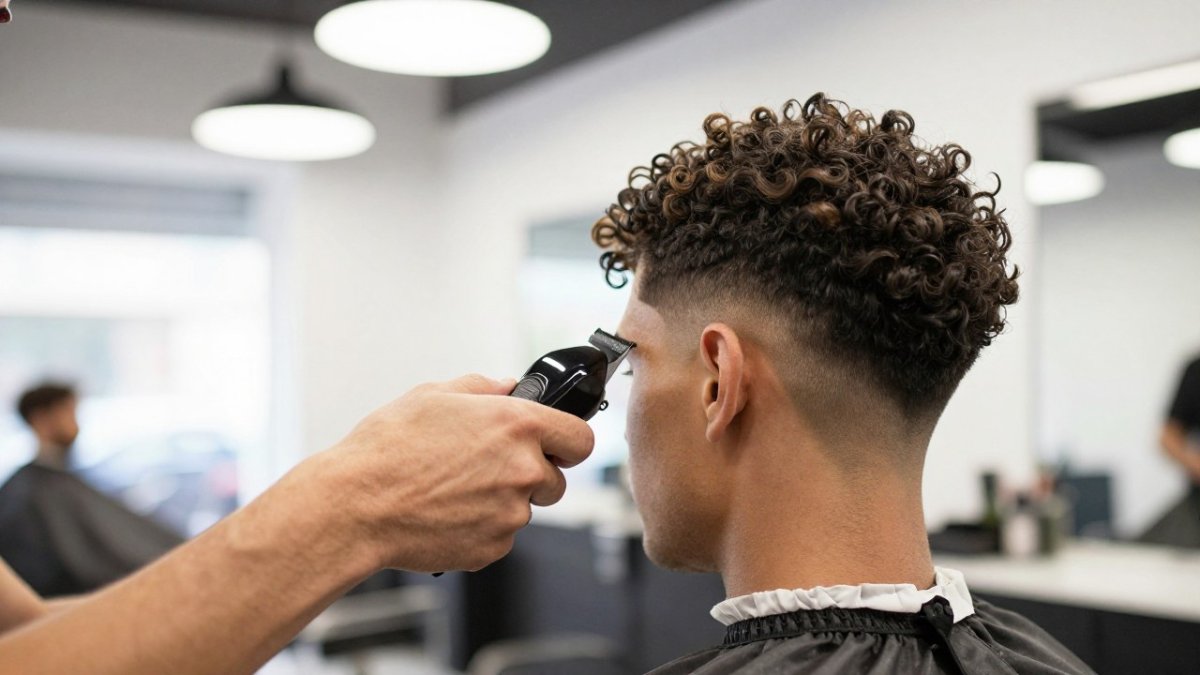
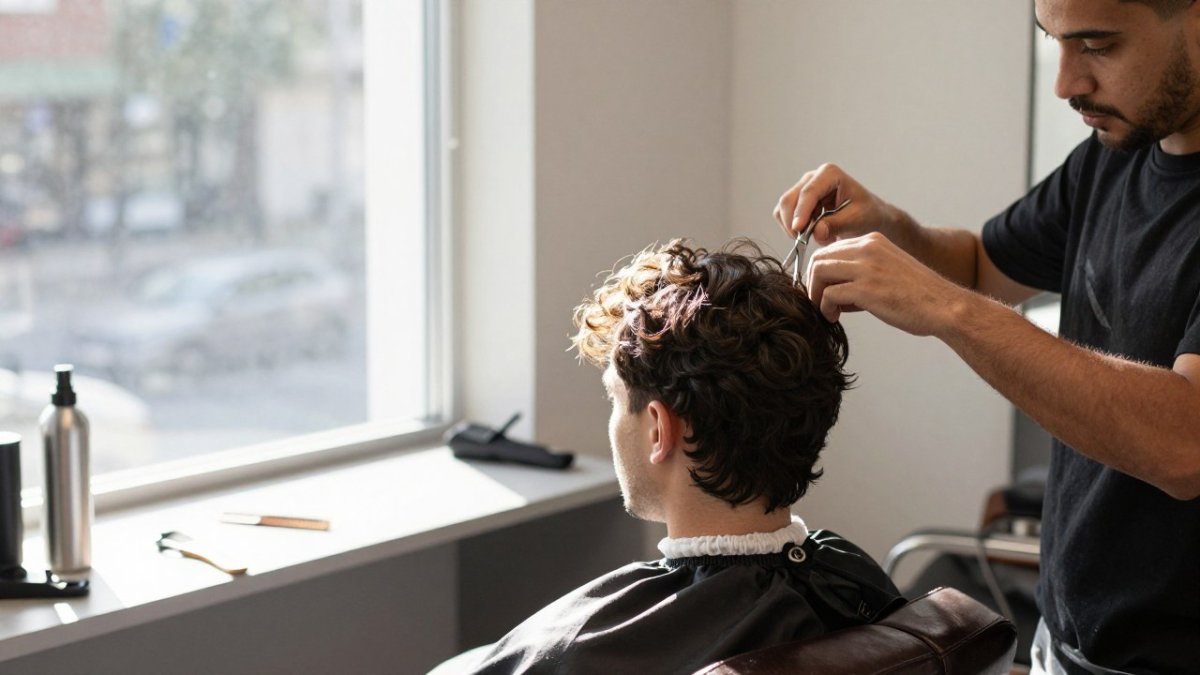
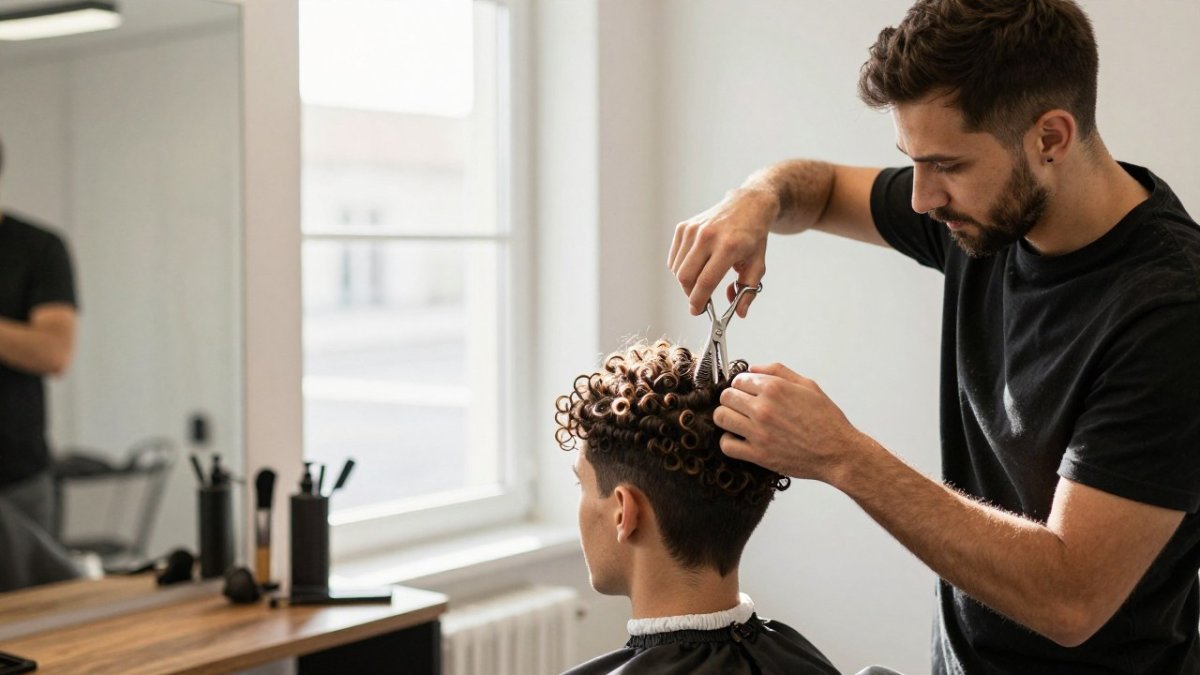
Curly crew cut. Short sides and back with a little more length on top, typically a #2 or #3 guard on the sides and roughly an inch to an inch and a half on top, scissor-cut rather than clippered so the curl can form. It works with most curl types, reads clean in an office, and needs almost no product. The trade-off is less room to experiment: grow it out and you are in awkward territory within three weeks. Ask for "a scissor-cut top, #2 on the sides, blended at the parietal ridge." It suits fine to medium density best; dense hair can look bulky on top fast.
Curly taper fade. A gradual transition toward the neckline and sideburns that blends into curls instead of cutting a hard line.
Low fade for wavy hair. A subtle, low-positioned fade, starting around the top of the ear, that leaves natural movement on top.
High-top fade. Structured height with precise faded sides. Bold, retro, and best on tight coils that hold shape without product.
| Style | Best Curl Type | Typical Guard/Length | Upkeep | Styling Time |
|---|---|---|---|---|
| Curly crew cut | Most types, fine to medium density | #2-#3 sides, 1-1.5 in top | Low | Under 2 minutes |
| Curly taper fade | Medium curls | Tapered nape, scissor top | Medium | 2-4 minutes |
| Low fade | Wavy, loose curls | #1-#2 low fade | Medium | 2-3 minutes |
| Mid fade curly cut | Medium to thick | Mid fade, scissor top | Medium | 3-5 minutes |
| High-top fade | Tight coils | #1 sides, box top | High | 5+ minutes |
If a fade or taper is on your shortlist, our fade haircut price guide explains what drives the cost so you can budget for the frequency these cuts demand.
Medium-Length Curly Hairstyles: Quiffs, Crops and Fringes
Medium length is where curly hair gets interesting.
Curly quiff. Volume pushed up and slightly back at the front, shorter at the sides.
Textured crop with a fringe. A short, layered top with a wavy fringe across the forehead.
Curly pompadour. A swept-back, high-volume look for thick hair.
Modernized bowl cut. Uniform length around the head, textured rather than blunt.
Long Curly Hairstyles: Heartthrob Cuts and Layered Length
Long curls only work when they are layered.
Heartthrob cut. A longer, layered style with natural movement and a slightly messy finish.
Layered length with a side part. Layers remove bulk, a side part adds shape, and the result keeps volume without width.
Long curls with an undercut. Keep the length on top, take the sides tight.
Long hair needs a stylist, not just a barber.
Type 3 Curly Hair Male Hairstyles: What Works Best
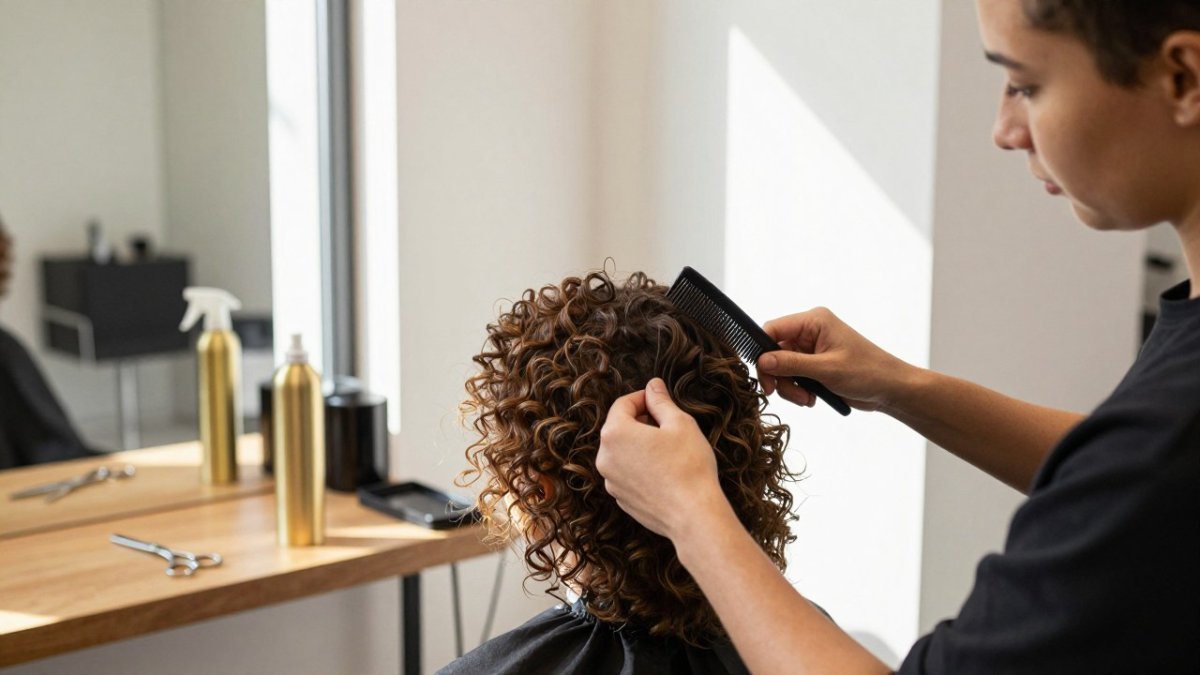
Type 3 curls, the springy, well-defined spirals, respond best to cuts that leave room for the coil to complete its turn. Cut too short and the curl pattern disappears into frizz; cut too long without layers and the weight pulls the spiral out. Type 3 has its own rules, and getting them right is the difference between a cut that looks styled and one that looks like it needs a cut.
The defining trait of type 3 hair is that the curl has a visible loop. Type 3a is a loose, large spiral; 3b is a tighter, more defined ringlet; 3c is a tight corkscrew with significant shrinkage. All three share the same cutting principle: the curl needs length to complete its turn, so the top should never be cut shorter than the length at which the spiral closes. For most type 3 hair, that minimum is roughly two to three inches on top, below that, the curl pattern breaks into wave or frizz.
For type 3 hair, we recommend:
- Curly taper fade for a professional look that still shows texture. Ask for a low taper and a scissor-cut top; clippers on the top will break the curl clumps.
- Mid fade curly cut if you want balance between clean sides and a defined top. The mid fade removes side bulk without touching the length the curl needs.
- Curly quiff for volume at the front with controlled sides. Best on 3a and 3b, where the looser spiral can be pushed up; 3c holds the shape but needs more product.
- Layered medium length if you want the curl pattern fully visible. Layers should be cut dry and point-cut at the ends so each ringlet can form.
The common mistake is over-thinning. Type 3 hair looks thick, so stylists reach for thinning shears, and the curl clumps break apart into a cloud of frizz. Ask for point cutting instead, the scissors cut into the end of the curl rather than across it, which keeps the clump intact.
Type 3 hair also changes with density. Fine type 3 hair looks best with a mid fade or a layered cut that keeps weight near the crown; dense type 3 hair can carry a high-contrast fade because the top has enough volume to balance it. If your hair is fine and you want a short cut, ask for a scissor-cut top rather than clippers, clippers remove the weight that fine curls need to hold their shape. If your hair is dense, ask the barber to remove weight internally with point cutting rather than thinning shears.
Best Haircut for Curly Hair Men With a Beard
The best haircut for curly hair men with a beard keeps the whole head balanced. If the hair on top is voluminous and the beard is close-cropped, the face looks top-heavy. Match the two.
- Short curls plus a full beard: a curly taper fade with a shaped beard gives a clean, deliberate line.
- Medium curls plus a short beard: a textured crop with a wavy fringe balances a neat stubble beard.
- Long curls plus a long beard: keep layers in the hair and shape the beard's cheek line so the two lengths connect.
Ask your barber to fade the sideburns into the beard rather than leaving a gap. That single detail separates a sharp cut from a patchy one.
How to Maintain Curly Hair for Men: Cuts, Products and Upkeep
Maintenance is where most curly haircuts succeed or fail. A great cut with the wrong routine looks average within days.
Cut schedule. Short fades and tapers need a trim every two to three weeks to stay sharp. Medium cuts hold for four to six weeks. Long layered cuts can stretch to eight to twelve weeks.
Wash and condition. Shampoo less often than you think, and condition every time. Curls need moisture more than they need cleansing.
Dry with care. Skip the towel rub.
Style damp. Apply a curl cream or leave-in conditioner while hair is still wet, then use a light gel or mousse for hold.
What most guides miss is the diffuser. If you want to know what to look for in the person maintaining all this, our guide on what to look for in a stylist covers the questions worth asking on a first visit.
Book a Verified Curly Hair Specialist on Alyry
Curly hair is a specialty, and not every barber has trained for it. If you want a shortlist of vetted names before you commit, our guide to finding vetted hair stylists walks through the process.
The hardest part of a curly haircut is not picking a style. It is finding someone who can execute it without thinning your curls into frizz or cutting wet and guessing at shrinkage.
Frequently Asked Questions
Which haircut is best for curly hair for men?
There is no single best cut, but the curly taper fade and the mid fade curly cut suit most curl patterns because they keep volume on top while cleaning up the neckline. Tight coils do well with a high-top fade or curly crew cut. Loose waves look sharp with a low fade. Ask your barber to cut the top dry so the final shape matches how your curls actually sit, and book a specialist who cuts curly hair men regularly rather than a general barber.
What does the 3:2:1 haircut rule mean?
The 3:2:1 rule is a proportion guide: three parts length on top, two parts at the mid-section, one part at the sides and back. It gives a barber a clear ratio to follow so the fade blends instead of jumping between lengths. For curly hair it is useful because shrinkage makes the top look shorter than it is. Tell your barber the ratio you want and let them adjust for your curl pattern and density.
How do I find a barber who specializes in curly hair?
Look for a barber whose portfolio shows clients with your curl pattern, not just straight hair. Ask whether they cut curls dry, how they handle shrinkage, and which products they finish with. On Alyry, every professional is verified, so you can compare barbers and stylists by service and book the one who lists curly cuts. Read reviews for mentions of fades on textured hair before you commit.
How often should men with curly hair get a haircut?
Short fades and taper cuts need a trim every two to three weeks to keep the sides sharp. Medium-length cuts such as a curly quiff or textured crop last four to six weeks. Longer styles like the heartthrob cut can go eight to twelve weeks if the layers are cut well, since they look better as they grow out. Between visits, use a leave-in conditioner and a light curl cream to keep volume and definition.