 Comparison
Knotless Braids vs Box Braids: Which Protective Style Wins in 2026
Last Updated: November 20, 2026
Quick Summary
Knotless braids start with your own hair braided in at the root using the feed-in method, with no knot holding the extension in place, while box braids use a small knot at the root to anchor each section. That flat root makes knotless braids gentler on sensitive scalps, but they take longer to install and cost more in labour than box braids.
- Knotless braids use the feed-in method, with no knot tied at the root.
- If your scalp is sensitive or you wear braids continuously, knotless braids are the better fit.
- Wash braids gently every two to three weeks with a diluted shampoo, focusing on the scalp.
- Pushing past eight weeks usually costs more in takedown time and breakage.
- Never rip braids out dry; mist the roots and unravel each braid gently from the end upward.
Table of Contents
- Knotless Braids vs Box Braids: The Core Differences
- How Each Technique Is Installed: Feed-In Method vs Traditional Knotting
- Tension, Weight, and Scalp Comfort: What to Expect
- Knotless Braids vs Box Braids Longevity: Wear Time and Grow-Out
- Knotless Braids vs Box Braids Cost: What Drives the Price Gap
- Knotless Braids Installation Time and Appointment Planning
- Questions to Ask a Braider Before Booking
- Which Braid Style Fits Your Hair and Lifestyle? A Decision Framework
- Frequently Asked Questions
Knotless Braids vs Box Braids: The Core Differences
Knotless braids start with your own hair braided in at the root, with no knot holding the extension in place. Box braids use a small knot at the root to anchor each section. That single difference in the knotless braids vs box braids decision changes how each style feels, how long it lasts, and what it costs. This guide breaks down both so you can choose with confidence.
The knot line is the tell. Run a finger along the root of a box braid and you will feel a small bump where the extension is tied on. With knotless braids, the root sits flat against the scalp because the braider feeds extension hair in gradually as the braid forms.
That flat root is why knotless braids have become the default protective style for people who wear braids back to back. It is also why they take longer to install.

How Each Technique Is Installed: Feed-In Method vs Traditional Knotting
Box braids are installed by sectioning clean, stretched hair, tying extension hair around the base of each section with a small knot, then braiding down. The process is systematic and a skilled braider moves quickly through the parts.
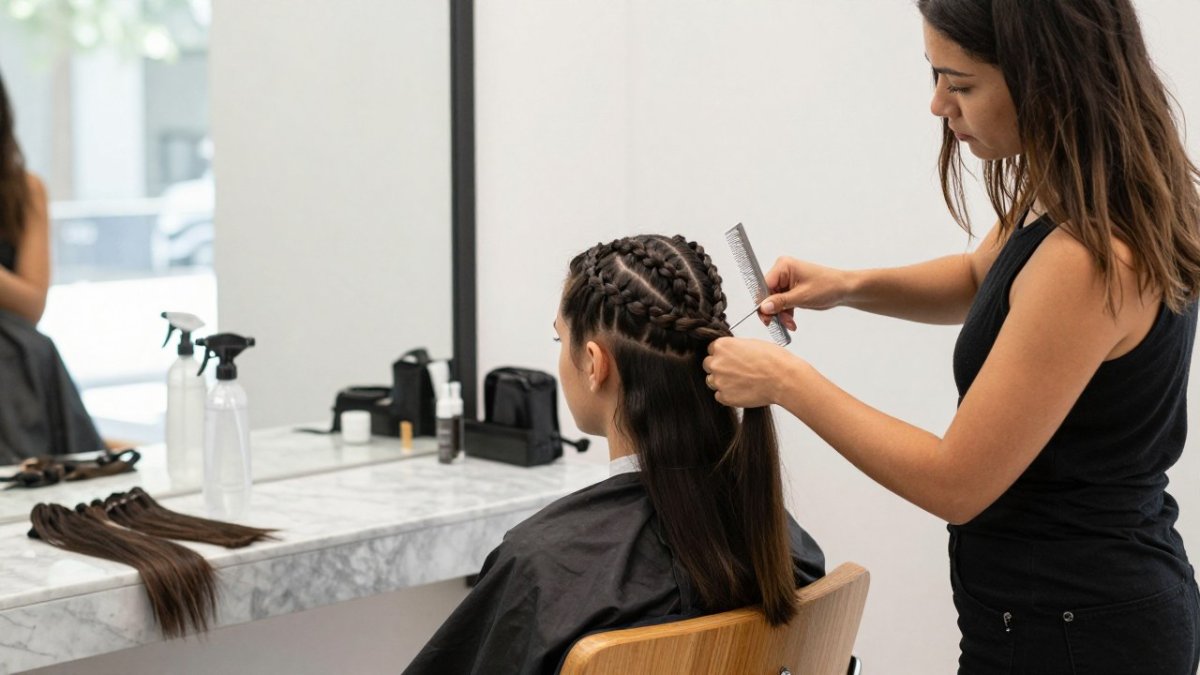
Knotless braids use the feed-in method. The braider starts with your natural hair alone, braids a few centimetres, then feeds in extension hair a little at a time. No knot is tied. The result is a braid that sits flat at the root.
A common mistake is assuming the two are interchangeable in the chair. They are not. Feed-in braiding demands more control because the braider is building tension gradually rather than anchoring everything at the root.
Tension, Weight, and Scalp Comfort: What to Expect
Knotless braids are generally described as causing less tension at the root because there is no knot pulling on the base of each section. People with sensitive scalps often report a lighter feel, though results depend on the braider's technique.
Box braids can feel firmer. The knot creates a fixed anchor at the root, which some people prefer because the style holds its shape and resists slipping. A braider who pulls too hard at the root can leave tender spots along the hairline.
Weight depends more on braid size, length, and extension hair density than on technique. Small braids with long extension hair feel heavier in both styles because there is more hair per section and more sections overall. If you want a lighter feel, ask for medium or large parts, a shorter length, or a lighter extension hair, and be honest about how much weight you can tolerate for six to eight weeks.
Suitability by hair condition matters here. Fine or fragile hair benefits from smaller, lighter sections and less tension at the root, which often points toward knotless. Technique matters more than the label on the style.
Watch out: if your scalp is throbbing within an hour of leaving the salon, the tension is too high. Speak up before you leave, not a week later. Other signs of excessive tension include white bumps along the hairline, a headache that builds through the day, and difficulty lying on your back or side without pain. A good braider will adjust on the spot; a braider who dismisses the discomfort is a reason to reconsider the appointment.
Safe removal matters too. Never rip braids out dry. Mist the roots with water or a light leave-in, let them soften, and unravel each braid gently from the end upward. If a knot resists, work it loose with your fingers rather than pulling.
Knotless Braids vs Box Braids Longevity: Wear Time and Grow-Out
Both styles typically last several weeks with proper care, and maintenance affects how long they hold up.
Durability comes down to maintenance, not time. A simple routine keeps both styles looking fresh and protects your natural hair underneath:
- Wash gently every two to three weeks with a diluted shampoo, focusing on the scalp rather than scrubbing the braids. Use a squeeze bottle or a wash bag to keep the braids from tangling.
- Dry thoroughly. Braids that stay damp at the root can develop odor or irritation. Air-dry in a well-ventilated space or use a hooded dryer on low heat.
- Moisturize the scalp and the braid itself with a light leave-in or oil, paying attention to the hairline and the parts where tension concentrates.
- Sleep with a satin scarf or bonnet, and consider a satin pillowcase as backup. Friction is what breaks down a braid, not time.
Signs it is time to take the style down: visible buildup at the root, loose braids that no longer hold their shape, a tender scalp that does not settle, or new growth that has pushed the braid more than an inch from the scalp. Pushing past eight weeks usually costs more in takedown time and breakage than it saves in salon visits.
Care differs slightly by style. Box braids collect lint and product at the knot, so a focused clean around each knot helps. Knotless braids can loosen at the root as new growth comes in, so a light touch during washing prevents premature slipping. In both cases, a mid-wear check-in with your braider, even a quick message, can catch a problem before it becomes a takedown.
Knotless Braids vs Box Braids Cost: What Drives the Price Gap
Pricing for braiding services varies, and the time a style takes can affect the cost.
Pricing also depends on length, braid size, extension hair type, and your braider's experience. Human hair extensions cost more than synthetic, and small braids cost more than jumbo. Ask for a quote based on your exact length and size before you book, and check the current pricing on the Alyry website.
For a fair comparison of how beauty services are priced, this guide on how to compare beauty service prices fairly walks through what to ask before you commit.
Knotless Braids Installation Time and Appointment Planning
Plan for a long appointment. Knotless braids can take longer than box braids of the same size, so plan for a long appointment.
Book early and confirm the braider's time estimate for your chosen length and size. If you are squeezing the appointment in before an event, choose medium or large parts, or book box braids instead.
If you are weighing how to lock in a slot, these options for booking local braiders cover the practical routes, from direct messages to marketplace booking.
Questions to Ask a Braider Before Booking
Ask these before you pay a deposit:
- How long will my appointment actually take, start to finish?
- Do you use the feed-in method for knotless braids, or a different technique?
- What extension hair do you recommend for my hair type?
- How tight will the roots be, and can you adjust tension if I ask?
- What is your policy if I need to reschedule?
- Do you charge extra for length, size, or hair provided?
A braider who answers these clearly is usually a braider who works carefully. If you are new to a city and working without referrals, this guide on what to look for in a professional braider sets out the signals that separate a skilled specialist from a generalist. When you are ready to book, here is how to find a braider near you for knotless braids.
Which Braid Style Fits Your Hair and Lifestyle? A Decision Framework
Use this to choose. If your scalp is sensitive or you wear braids continuously, knotless braids are the better fit. If you want a firm hold, a faster appointment, or a lower price, box braids win.
| Your Priority | Choose Knotless | Choose Box Braids |
|---|---|---|
| Scalp comfort | Flatter root, less pull | Firmer grip |
| Appointment time | Longer, book ahead | Shorter |
| Budget | Higher labour cost | Lower labour cost |
| Grow-out | Hides new growth longer | Knot line shows sooner |
| Hold and structure | Softer, natural movement | Firm, defined shape |
| Styling | Ponytails and updos sit flat | Holds structured styles |
If you have shorter natural hair and are leaning toward knotless, this guide on knotless braids for short hair shows which styles actually work.
Whichever style you choose, the braider matters more than the technique. A rushed install in either style will cost you comfort and wear time. Alyry is a verified marketplace where you can compare vetted braiders, stylists, and other beauty professionals, book your appointment in one place, and filter for the specialists who work with your hair type. Get started with Alyry and book a braider who fits your style, schedule, and budget.
Frequently Asked Questions
Are knotless braids less painful than box braids?
Comfort depends largely on how the braider installs the style. A braider who pulls too tightly can make either style uncomfortable. Speak up during installation if you feel sharp pulling, and ask about root tension before you book.
Which lasts longer, knotless braids or box braids?
Longevity depends on your hair texture, how you sleep, and how often you wash. Ask your braider how they secure the root line if you want maximum wear time.
How much do knotless braids and box braids cost?
Pricing depends on braid size, length, your location, and the braider's experience. Pricing depends on braid size, length, and the braider's experience. Always request a quote directly from the braider and confirm whether hair extensions, washing, or styling are included. Check current pricing on the Alyry website before you commit.
How long does it take to install knotless braids?
Installation time varies with the style, and small braids and longer lengths add time. Book a full appointment window and ask your braider for a realistic estimate based on your braid size and length. If you are on a tight schedule before an event, tell the braider upfront so they can plan accordingly.